Welcome: Changzhou Zhuoyue Automation System Co., Ltd
Language:
 ∷
∷

∷
 ∷
∷
2025-02-15
Online weighing scales (also known as dynamic weighing scales or automatic weighing scales) are key devices used to detect the weight of products in real - time in industrial production lines. They are widely applied in industries such as food, pharmaceuticals, chemicals, and logistics. Their high - precision and high - stability characteristics make them important tools for quality control and cost management. However, the performance of weighing scales is highly dependent on the operating environment. This article will analyze the core requirements of online weighing scales for the operating environment from multiple dimensions, providing a reference for equipment selection, installation, and maintenance.
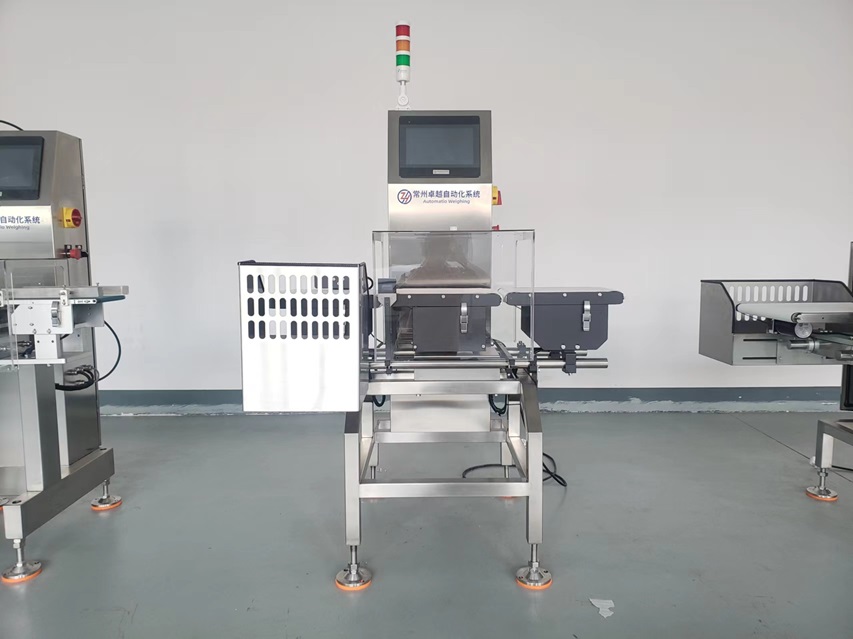
I. Temperature and Humidity Control: The Lifeline of Precision Sensors
The core components of online weighing scales, weighing sensors and electronic components, are extremely sensitive to temperature and humidity:
Temperature Range:
The ideal operating temperature is usually 0 - 40°C. Extreme high temperatures (>50°C) can cause zero - point drift of the sensors, and low temperatures (< - 10°C) may affect the response speed of the circuit. For example, in a frozen food production line, a model with stronger low - temperature adaptability should be selected, and the accumulation of condensed water should be avoided.
Humidity Requirements:
It is recommended that the environmental humidity be maintained at 30% - 85% RH. Excessive humidity can cause short - circuits in the circuit or corrosion of metal parts. Adjustment can be made through air conditioners, dehumidifiers, or sealed designs. In the clean workshops of the pharmaceutical industry, special attention should be paid to the impact of humidity fluctuations on accuracy.
II. Vibration and Airflow Isolation: Ensuring Dynamic Accuracy
The essence of dynamic weighing is to complete the measurement during the movement of products, and environmental interference can significantly affect the results:
Vibration Control:
It is necessary to keep away from large - scale vibration sources (such as stamping machines, centrifuges), and install shock - absorbing bases or isolation ground piles if necessary. A case in a beverage factory shows that after a new packaging machine was added next to the production line, the weighing error increased by 0.5%. The accuracy was restored after installing rubber dampers.
Airflow Protection:
Airflows generated by fans, air - conditioner outlets, or high - speed conveyor belts may cause weight fluctuations. It is recommended to set up wind shields or adjust the equipment layout. High - precision weighing at the laboratory level (such as drug dispensing) needs to be carried out in a closed environment.
III. Power and Signal Stability: The Cornerstone of Data Reliability
Power Quality:
The voltage fluctuation should be controlled within ±10%, and a voltage - stabilizing power supply is recommended. In an electronic component factory, a sudden voltage drop once caused the weighing system to restart, resulting in the missed inspection of 2000 products per hour.
Electromagnetic Compatibility:
Keep away from electromagnetic interference sources such as inverters and high - power motors, and use shielded cables if necessary. Case: The weighing scale in a chemical factory had random errors due to being close to radio - frequency equipment, and the problem was solved after adding a metal shielding layer.
IV. Cleanliness and Protection Level: Matching the Production Scenario
IP Protection Level:
In the food industry, an IP65 or above (dust - proof and waterproof) is recommended. In the pharmaceutical industry, it needs to meet the GMP cleaning standards. In meat processing plants, stainless - steel materials combined with high - pressure water - gun cleaning designs are commonly used.
Explosion - Proof Requirements:
In chemical and dusty environments, explosion - proof certified models (such as those meeting ATEX standards) should be selected to avoid accidents caused by electric sparks.
V. Space Layout and Maintenance Passage
Installation Spacing:
At least 1 - meter space should be reserved in the front and back to adjust the conveyor belt speed, and a 50 - cm maintenance passage should be left on both sides. In a logistics center, due to limited space, calibration was difficult, and the annual failure rate increased by 40%.
Horizontal Calibration:
The horizontal deviation of the installation base should be less than 0.2°. Regularly detect it with a spirit level. Inclination can cause the product's center of gravity to shift, which has a significant impact, especially on bottled liquids.
VI. Additional Requirements for Special Industries
Food and Pharmaceutical Industries:
Corrosion - resistant materials (such as 316L stainless steel) and easy - to - clean structural designs are required. In some scenarios, an in - line cleaning (CIP) function is required.
High - Temperature Environments:
In high - temperature workshops such as glass manufacturing, high - temperature - resistant sensors (up to 150°C) should be selected, and a forced air - cooling system should be added.
Contact: Mr.Bai
Phone: +86 19905190705
Tel: +86 19905190705
Email: 623605936@qq.com
Add: No. 58, Leshan West Road, Xinbei District, Changzhou City, Jiangsu Province